The Hire I Didn't Expect to Make
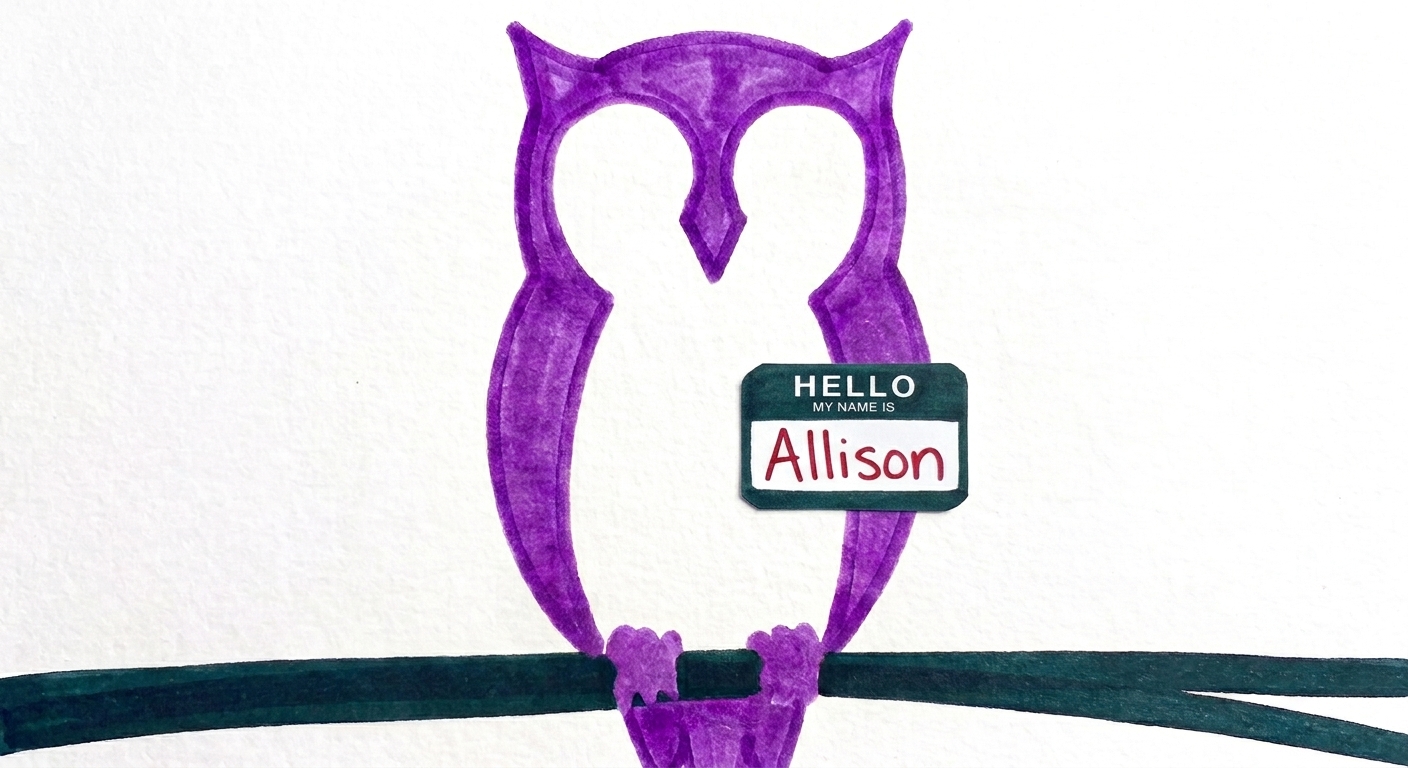
Last week I brought someone onto the team whose job title would have made no sense to me two years ago.
Allison Dodson doesn't build agents. She doesn't write prompts for a living, doesn't touch our automation stack, and if you asked her to explain a vector database she'd probably just ask you why you needed one. What she's good at is sitting with a person who has been doing their job the same way for years and helping them figure out what changes now that they have a new colleague sitting next to them who happens to be an AI.
I hired her because I ran out of hours. Not billable hours, though those too, but the specific kind of hour where a client's ops director looks at me after we've built the thing and asks, quietly, “okay, but how do I actually get my team to use this.” For a while I answered that question badly. I'd walk them through the interface, show them a few prompts, maybe do a lunch-and-learn with slides. It never stuck, and I told myself that was a training problem, something I'd get better at with reps. It took longer than I'd like to admit to realize it wasn't a training problem at all. It was that I kept treating the whole thing as a technology rollout, like we were installing a new phone system, when what was actually happening to these people was closer to getting handed a very capable, very literal new coworker and being told to figure out the working relationship yourselves.
That's a different problem. You don't onboard a coworker with a slide deck. You sit with them, you watch what they actually do all day, and you help them notice the parts of their job that are drudgery dressed up as diligence. Most people can't see that on their own, not because they're not smart, but because nobody's ever asked them to look. Everyone has some version of the two hours a day spent moving information from one place to another because that's just how it's done, said in the tone people use for facts they've stopped questioning. It's rarely defensiveness. It's more that nobody ever framed it as a choice they were allowed to reconsider.
Allison is good at surfacing that in a way I'm not, because I show up already thinking about architecture and she shows up thinking about the person. She's spent her career in change management and org design, and she has this way of asking someone what they actually do all day that makes them feel interviewed rather than audited, which turns out to matter enormously, because the moment someone feels audited they start describing their job the way it appears on the org chart instead of the way it actually happens at their desk. The real job is always messier and more interesting than the org chart version, and that mess is exactly where the opportunities live.
The pitch I keep making to clients now, and the one I'd make to almost any company with people who sit at computers, is embarrassingly simple. Give everyone a Claude account. It's twenty dollars a month, which is less than most companies spend on the coffee that gets thrown away half-finished, and for that twenty dollars you're handing someone something closer to two to five times their own capability, depending on the work. That's the first thing, and it's the easy thing, because it's just a purchasing decision.
The second thing is harder and it's the thing almost nobody does, which is sit down with each person and go through everything they do in a day, task by task, and ask where an AI collaborator could actually help. Not “where can we automate this,” which is the wrong frame and puts people immediately on the defensive because it sounds like a countdown to their own redundancy. The better question is where they could use a thought partner, somewhere to think out loud, get a first draft, catch a mistake before it becomes a problem, or take the drudgery off their plate so they get to spend their day on the parts of the job that actually required them to show up. Almost nobody took their job because they loved the data entry buried inside it. They took it because they're good at some judgment call the job requires, and that's the part worth protecting time for.
I want to be careful here, because I know how this sounds coming from someone who sells AI implementation for a living, so let me say the thing plainly: this isn't about replacing anyone. I've had exactly zero clients this year where the honest end state of the engagement was fewer people doing the same work. Every one of them is understaffed for what they actually need to get done, and the AI isn't taking a job, it's letting one person do the job of one and a half people, which is the job they were already quietly being asked to do anyway, just now without the eleven-hour days.
What Allison's first few weeks have shown me is that the reskilling conversation is where almost all the value actually sits, and it's the part everyone skips because it's slower and less demoable than shipping an agent. You can show a client a working automation in an afternoon. You cannot show them, in an afternoon, someone who's genuinely comfortable treating an AI as a working partner instead of a suspicious appliance sitting on their desktop. That takes weeks, it takes someone asking good questions, and it takes the company being willing to sit still long enough to have the conversation instead of just buying the tool and hoping osmosis handles the rest.
Somewhere in that hour, one of you is going to say “wait, why do we do it that way,” and that sentence is worth more than most AI strategy decks I've read this year.